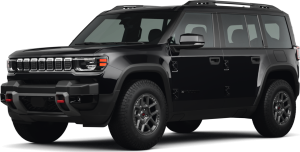
If you’ve decided your next SUV is going to have a HEMI V8, the 2027 Dodge Durango lineup gives you two very different ways to get one. The R/T now comes standard with the 6.4L “392” HEMI, an engine Dodge brought back in its “The 392 Roars Again” announcement (DodgeGarage, March 2026). Dodge Canada lists it for 2027 as the R/T 392 Plus and R/T 392 Premium. Its 2026 Durango lineup has six models and no R/T. The SRT Hellcat sits above it with a supercharged 6.2L V8 and the kind of power that makes a 2,400-kg family hauler embarrass sports cars.
So which V8 is right for you? It comes down to how you’ll actually use it. Both tow heavy, both are built for Alberta winters with available all-wheel drive, and both make the right noises. The difference is roughly 235 horsepower, a meaningful gap in running costs, and whether you want a do-everything daily driver or an outright performance flagship. This guide compares the two head to head so you can pick with your eyes open. For the full lineup including the V6 and GT HEMI trims, see our broader 2026 Durango buyer’s guide.
Key Takeaways
- The R/T returns to a standard 6.4L “392” HEMI V8 making 475 hp and 470 lb-ft for 2027 (Dodge Canada).
- The SRT Hellcat uses a supercharged 6.2L HEMI V8 producing 710 hp (DodgeGarage, March 2026). Dodge Canada lists it as the SRT Hellcat Jailbreak, with seating for five.
- Both tow up to 3,946 kg (8,700 lb) when properly equipped, so towing is not the tiebreaker (Dodge Canada).
- The R/T 392 is the daily-drivable, value-conscious V8; the Hellcat is the no-compromise performance flagship for the buyer who wants maximum power.
What’s the Difference Between the R/T 392 and SRT Hellcat?
The short version: the R/T 392 is a naturally aspirated 6.4L HEMI making 475 hp and 470 lb-ft, while the SRT Hellcat is a supercharged 6.2L HEMI making 710 hp. Same Durango name, two very different engines, and a power gap of 235 hp between them (DodgeGarage, March 2026). Seating differs too: Dodge Canada lists seven seats for the 2027 R/T 392 and five for the SRT Hellcat Jailbreak.
The R/T 392 is the headline news of the 2027 model year. After several seasons of uncertainty around the V8, Dodge made the 6.4L 392 HEMI standard equipment on the R/T (DodgeGarage, March 2026). It’s a naturally aspirated engine, meaning no supercharger, so it’s mechanically simpler, lighter over the front axle, and easier to live with day to day. You get a genuine V8 soundtrack and serious capability without stepping into flagship territory.
The SRT Hellcat is the halo trim. Its 6.2L V8 is supercharged, which is how it reaches 710 hp and runs 0 to 100 km/h in the low-3-second range . That makes it the most powerful Durango in Dodge Canada’s lineup. It’s a niche choice, but for the buyer who wants the biggest number on the spec sheet in a vehicle that still seats the whole family, nothing else comes close.
Both engines drive through an eight-speed automatic and pair with available all-wheel drive, so the bones are shared. The decision is really about how much power you want and what you’re willing to spend to feed it.
How Do the R/T 392 and SRT Hellcat Compare on Performance?
On raw output, the SRT Hellcat’s supercharged 6.2L V8 makes 710 hp versus the R/T 392’s 475 hp from its naturally aspirated 6.4L, a gap of 235 horsepower (DodgeGarage, March 2026). That difference is dramatic on a spec sheet, but both are quick enough to surprise anyone who still thinks “three-row SUV” means slow.
Here’s how the two V8s stack up:
| Spec | R/T 392 | SRT Hellcat |
|---|---|---|
| Engine | 6.4L “392” HEMI V8 | 6.2L supercharged HEMI V8 |
| Horsepower | 475 hp | 710 hp |
| Torque | 470 lb-ft | ~645 lb-ft |
| Aspiration | Naturally aspirated | Supercharged |
| 0-100 km/h | Low-to-mid 4 seconds | Low-3-second range |
| Max towing (base configuration) | 3,946 kg / 8,700 lb | 3,946 kg / 8,700 lb |
The Hellcat’s advantage is acceleration and the experience that comes with it: the supercharger whine, the shove in the back, and the bragging rights of 710 hp. It’s a genuine performance vehicle that happens to be an SUV.
The R/T 392’s counterpoint is that 475 hp is already a lot of engine. In real-world driving, on Anthony Henday Drive or merging onto Highway 21, the 392 never feels short of power. Honestly, most drivers will use a fraction of what either engine offers. The Hellcat is faster; the question is whether you’ll ever find a legal place to feel the full difference.
Which Durango V8 Is Better for Towing?
For towing, it’s effectively a tie. Both the 2027 R/T 392 and the SRT Hellcat tow up to 3,946 kg (8,700 lb) when properly equipped, which Dodge calls best-in-class (Dodge Canada). Dodge Canada shows that rating for the base configuration and notes that options, equipment, passengers and cargo may affect it. So if towing is your priority, it doesn’t push you toward one engine over the other.
What does 3,946 kg actually cover? A typical 24-foot travel trailer, most utility and equipment trailers, a loaded enclosed cargo trailer, and the boat or sled trailer headed to the foothills all sit comfortably under that ceiling. Either V8 Durango handles that load without drama.
Because both engines tow the same maximum, the practical edge goes to the R/T 392 for most trailer owners. The 392 delivers the torque you want for pulling, 470 lb-ft (DodgeGarage, March 2026), while burning less fuel than the supercharged Hellcat when you’re loaded down and grinding up a grade. If you tow regularly, ask about the Tow ‘n Go package specifically. Our Edmonton Dodge dealer team can confirm which trims it’s available on and match it to your trailer.
Which V8 Is Better for Daily Driving and Alberta Winters?
For daily driving, the R/T 392 is the easier vehicle to live with, and both are well suited to Alberta winters thanks to available all-wheel drive on every trim (Dodge Canada, 2026). AWD paired with dedicated winter tires improves traction and stopping in snow and ice, which matters more in our climate than almost anywhere in Canada.
The case for the R/T 392 as a daily is straightforward. Its naturally aspirated engine is simpler, the fuel bill is lower than the Hellcat’s, and 475 hp is more than enough for everyday driving. It starts in a cold snap, warms up like any V8, and doesn’t ask you to baby a supercharger. For a Sherwood Park or Edmonton family that wants V8 character without flagship running costs, it’s the sensible pick.
The Hellcat works as a daily too, but you pay for the privilege at the pump, and 710 hp in winter demands respect. On packed snow or black ice, that much power can overwhelm available grip if you’re heavy with your right foot, so traction management and good winter tires aren’t optional. The AWD system and the Durango’s elevated ride height help, but the Hellcat rewards a driver who’s deliberate in the cold.
Two practical notes from our service team. First, budget for a dedicated set of winter tires on either trim, because AWD helps you go but winter tires help you stop. Second, a block heater is worth using when overnight lows drop below roughly minus 20 C, which protects the engine and improves cold starts.
What’s the Price and Running-Cost Trade-Off?
The honest framing is this: the R/T 392 is the value V8 and the SRT Hellcat is the premium flagship, both in purchase price and in what they cost to run. Dodge Canada publishes a starting MSRP for each, before freight and PDI, and the gap between them is significant.
A few things worth knowing about the trade-off:
- Purchase price steps up meaningfully from the R/T 392 to the SRT Hellcat. The Hellcat’s supercharged engine and performance hardware command a premium.
- Fuel is the ongoing cost most buyers underestimate. A supercharged 710 hp V8 drinks more than a naturally aspirated 475 hp one, especially driven hard or towing.
- Freight, PDI, fees, and incentives all move the real number, and incentives change month to month. The unit on the lot carries the offers active that week.
Here’s the contrarian take worth sitting with. The Hellcat is the more exciting vehicle, but the R/T 392 is arguably the smarter buy for almost everyone. You get the same towing, seven seats to the Hellcat’s listed five, the same winter-ready AWD, and a V8 that’s genuinely fast, for less money up front and less at the pump. The Hellcat’s extra power is real, but it’s a want, not a need, and that’s worth being honest with yourself about before you sign.
Because pricing, inventory, and incentives move week to week, the accurate answer to “what will mine cost out the door” is a quick conversation on a specific vehicle. See current Durango inventory and pricing here, or talk to our team for an exact, all-in number.
So Which Durango V8 Should You Buy?
Buy the R/T 392 if you want a daily-drivable V8 that tows heavy, handles Alberta winters, and saves you money up front and at the pump; buy the SRT Hellcat if maximum power and the supercharged experience are worth the premium to you (DodgeGarage, March 2026). Both are excellent. They just serve different buyers.
Here’s the short version:
- Want a sensible V8 that does everything? The R/T 392 is the one to drive first. 475 hp, full towing, lower running costs.
- Want the most powerful Durango on the block? The SRT Hellcat delivers 710 hp and the supercharged experience to match.
- Towing the deciding factor? It’s a tie at 3,946 kg, so let daily use and budget break it.
The best way to choose is to drive them back to back. Browse our new Durango inventory at Sherwood Dodge, or talk to our team serving Edmonton and Sherwood Park about which V8 and current incentive fit your family and your budget.
Frequently Asked Questions
What’s the difference between the Durango R/T 392 and SRT Hellcat?
The R/T 392 uses a naturally aspirated 6.4L HEMI V8 making 475 hp, while the SRT Hellcat uses a supercharged 6.2L HEMI V8 making 710 hp (DodgeGarage, March 2026). Dodge Canada lists the R/T 392 as a 2027 model seating seven and the Hellcat with seating for five. The Hellcat adds 235 hp and a supercharger.
Is the Durango R/T 392 fast enough, or do I need the Hellcat?
For nearly everyone, the R/T 392 is more than fast enough. Its 475 hp moves a three-row SUV from 0 to 100 km/h in the low-to-mid 4-second range, which is genuinely quick. The Hellcat’s 710 hp is faster still, but most drivers rarely use the full difference. The Hellcat is a want, not a need.
Do the R/T 392 and SRT Hellcat tow the same amount?
Effectively yes. Both V8 Durango models tow up to 3,946 kg (8,700 lb) when properly equipped, a rating Dodge Canada calls best-in-class and shows for the base configuration. Because the maximum towing rating is the same, towing alone doesn’t push you toward one engine over the other.
Which Durango V8 is better for Alberta winters?
Both come with available all-wheel drive and handle winter well with dedicated winter tires, but the R/T 392 is the easier daily driver in the cold. Its 710 hp Hellcat sibling can overwhelm available traction if you’re heavy with the throttle on snow or ice. On either, a block heater helps below roughly minus 20 C.
Which Durango V8 costs less to own?
The R/T 392 is the lower-cost choice both to buy and to run. Its starting MSRP is below the SRT Hellcat’s, and its naturally aspirated engine burns less fuel than the supercharged Hellcat, especially under load. Freight, PDI, fees, and current incentives all affect the final number.