There is no single “best truck for an Alberta winter,” and any dealer who tells you otherwise is selling, not advising. The truck that conquers an unplowed acreage driveway near Ardrossan is configured differently than the one commuting the Anthony Henday every morning. What matters is matching the 4x4 system, the differential, the ground clearance, and, above all, the tires to how and where you actually drive. Transport Canada notes that below 7 °C all-season tires lose elasticity and traction, and that winter tires measurably shorten stopping distances on cold, slippery roads (Transport Canada, 2024).
This guide explains what genuinely makes a pickup capable when it drops to −30 °C, using the RAM 1500 and 2500 lineup as the worked examples. We have sold and serviced these trucks through enough Sherwood Park winters to know which features earn their keep and which are marketing. The goal is a truck that is best for your winter, set up right, not a spec sheet that wins arguments online.
Key Takeaways
- Winter tires are the single biggest factor in cold-weather traction and stopping, ahead of the drivetrain itself; below 7 °C all-seasons harden and lose grip, while winter tires measurably shorten braking distances (Transport Canada, 2024).
- “4WD” is not one thing: part-time 4WD, full-time 4WD, and automatic 4WD each behave differently on Alberta’s mix of dry highway and packed snow.
- A locking or limited-slip rear differential is what gets you moving when one wheel is on ice; it matters more than raw horsepower in winter.
- Block heaters, heated mirrors, and a remote start are genuine cold-start tools in a −30 °C climate, not luxuries.
What Actually Makes a Truck Good in an Alberta Winter?
Capability in an Alberta winter comes down to four things working together: traction at the tire, the right 4WD mode for the surface, enough ground clearance to clear drifts, and reliable cold starting. The Government of Alberta recommends running four winter or all-weather tires for better traction in severe winter conditions, since they grip far better than all-seasons on snow and ice (Government of Alberta, 2024).
Here is the honest order of importance, in our experience on these roads. Tires first, drivetrain second, clearance third, electronics fourth. A four-wheel-drive truck on worn all-seasons will lose to a two-wheel-drive truck on proper winter rubber when it comes time to stop at an icy intersection on Wye Road. People get this backwards constantly, because 4x4 feels reassuring when you accelerate. But winter driving is mostly about stopping and steering, and that happens at the contact patch.
The second reality is that “trucks are great in snow” is only half true. A pickup’s light rear end, with no load over the drive wheels, can actually be worse than a sedan in a straight-line slip if the truck is two-wheel drive and unweighted. That is exactly why 4x4, the right differential, and a bit of bed weight matter so much on a pickup specifically. We will cover each below.
Browse our in-stock RAM 1500 inventory to see which 4x4 configurations and trims are on the ground right now at Sherwood Dodge.
4WD Systems Explained: Part-Time, Full-Time, and Auto 4WD
Not all four-wheel-drive systems work the same way, and the difference is real on Alberta roads. RAM trucks offer part-time 4WD, and many trims add an automatic 4WD mode that engages on its own when wheels slip (RAM Canada, 2026).
The short version: part-time 4WD is for low-grip surfaces only and must be switched off on dry pavement, full-time/AWD can run on any surface, and automatic 4WD splits the difference by engaging when it detects slip. Here is how each behaves in our climate:
| System | How it works | Best for | Watch-out |
|---|---|---|---|
| Part-time 4WD (4H/4L) | Driver locks front and rear axles together; no centre differential | Deep snow, ice, off-pavement, towing in winter | Do not use on dry/wet bare pavement — it binds the drivetrain |
| Automatic 4WD | System sends power to the front axle only when it senses rear slip | Mixed roads where conditions change block to block | Slightly less predictable than locking in 4H yourself |
| Full-time 4WD / AWD | Power to all four wheels continuously via a centre differential | Drivers who want set-and-forget grip on any surface | Often a higher-package feature; confirm availability |
For most Sherwood Park and Edmonton drivers, automatic 4WD is the everyday hero. It leaves the truck in rear-drive for efficiency on clear pavement, then engages the front axle the instant a wheel slips on a snowy on-ramp, with no input from you. When the conditions get serious, packed snow on a rural road, an icy acreage approach, towing in a storm, that is when you reach down and lock it into 4H yourself. 4L (low range) is for crawling: pulling a stuck trailer, climbing a steep snowed-in drive, or easing down an icy grade under engine braking.
One caution worth repeating, because it costs people money. Part-time 4WD (4H and 4L) is not meant for dry or merely wet bare pavement. With the axles locked together and no centre differential, the drivetrain binds in turns and you can damage it. On clear highway, run rear-drive or automatic 4WD, then lock in 4H only when traction actually drops.
Why Winter Tires Matter More Than the Truck
If you read one section, read this one. Winter tires are the single most important winter-driving upgrade on any truck, full stop, and they outrank the drivetrain. Transport Canada reports that winter tires measurably shorten stopping distances on cold roads versus all-seasons, and that below 7 °C all-season and summer rubber begins to lose elasticity and traction where a winter compound stays pliable (Transport Canada, 2024).
Here is the part the spec-sheet debates miss. Four-wheel drive helps you go. Winter tires help you stop and steer, and stopping and steering are what keep you out of the ditch on the Yellowhead. A 4x4 truck on all-seasons will out-accelerate a winter-tired two-wheel-drive truck from a stop, then sail past it into the intersection when both hit the brakes on ice. We see the aftermath of that exact mismatch in the service bay every January.
So what does “winter tire” actually mean? Look for the three-peak-mountain-snowflake (3PMSF) symbol on the sidewall, which certifies severe snow performance. A true winter compound on a dedicated set of rims is the gold standard: better grip than all-weather tires, and you swap the whole set in fall and spring without re-mounting. All-weather tires (also 3PMSF-rated) are a reasonable single-set compromise for lighter-snow drivers, but they trade away some deep-winter bite and wear faster. For −30 °C cold snaps and unplowed roads, dedicated winters win.
Differentials and Traction Aids: Getting Unstuck
A locking or limited-slip differential is what actually gets a truck moving when one drive wheel is on glare ice. RAM offers an anti-spin (limited-slip) rear axle and, on properly equipped 4x4 trims such as the Rebel, an electronic locking rear differential (RAM Canada, 2026).
Why this matters: an open differential, the default on a basic truck, sends power to the wheel with the least grip. So if your right rear is on ice and your left rear is on dry gravel, an open diff spins the icy wheel uselessly and you go nowhere. This is the classic “one wheel spinning in the driveway” problem, and it has nothing to do with horsepower. You can have 400-plus horses and still be stuck.
A limited-slip differential automatically shifts some torque to the wheel that still has grip, which is enough to get most drivers unstuck on a snowy approach. An electronic locking rear differential goes further: it mechanically locks both rear wheels to turn at the same speed, so both push regardless of what is under each tire. For acreage owners, oil-patch access roads, or anyone who regularly faces an unplowed driveway, a locking rear diff is one of the most genuinely useful winter options you can spec.
Two more aids worth knowing. Electronic stability control and traction control are standard and quietly do a lot in winter, trimming wheelspin and helping you hold a line. And hill-descent control, on equipped trims, manages your speed down an icy grade so you are not riding the brakes. None of these replace winter tires; they layer on top of them.
Cold-Start and Block-Heater Realities at −30 °C
When Alberta hits −30 °C, getting the truck started and warm matters as much as how it drives. A factory or dealer-installed block heater, plugged in overnight, keeps the engine coolant and oil warm enough for reliable cold starts and faster cabin heat (Natural Resources Canada, 2024).
From our service team’s experience, here is what actually earns its keep below −20 °C. A block heater on a timer (set it for two to three hours before you leave, not all night) is the big one for starts and engine longevity. A remote start gets the cabin and defrost going before you walk out, which is comfort but also safety: you see out of every window. Heated seats, a heated steering wheel, and heated mirrors stop being luxuries when your commute starts in the dark at −28 °C. Heated mirrors in particular clear the ice that a scraper can’t reach.
A practical traction note specific to pickups. Because a truck’s drive wheels sit under a light, empty bed, adding a couple hundred pounds of ballast over the rear axle, sandbags or paving stones pushed against the tailgate, measurably improves grip on a two-wheel-drive run and helps even a 4x4 settle in deep snow. It is cheap, it works, and it is the oldest trick in the Alberta winter playbook. Just secure it so it can’t slide forward in a hard stop.
How to Configure a RAM for an Alberta Winter
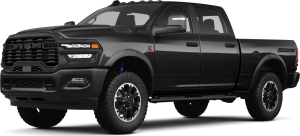
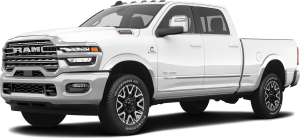
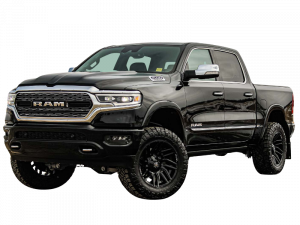
A winter-ready RAM is less about the priciest trim and more about the right boxes checked: a 4x4 system, a limited-slip or locking rear differential, a block heater, and a dedicated set of winter tires. RAM 1500 and 2500 4x4 configurations are built for exactly this climate, and pricing starts from RAM Canada’s published MSRP before freight and PDI .
Here is how we’d spec it for the most common Alberta use cases:
- Daily highway commuter (Henday/Yellowhead): A RAM 1500 4x4 with automatic 4WD and a limited-slip rear is plenty. Add winters and a block heater. You get clear-road efficiency and automatic grip when it slips.
- Acreage / unplowed rural driveway: Step up to an electronic locking rear differential and prioritize ground clearance. The locker is what saves you on a snowed-in approach.
- Towing or heavy work in winter (oil-patch, fleet): A RAM 2500 with 4x4 and the heavier-duty driveline handles cold-weather towing and rough access roads; confirm the tow rating for your trailer.
Whatever the use case, the non-negotiables are the same: a real 4x4 system, a traction-helping differential, a block heater, and winter tires on their own rims. Get those four right and a RAM will handle whatever the season throws at it. Our team serving Edmonton and Sherwood Park can walk you through which 4x4 configuration and options match your driveway, your commute, and your trailer.
Because pricing, inventory, and incentives move week to week, the honest answer to “what will mine cost out the door” is a quick conversation on a specific truck. See current RAM 1500 inventory and pricing here, or talk to our team for an exact, all-in number.
Frequently Asked Questions
What is the best truck for an Alberta winter?
There is no single best truck; the best one is configured for how you drive. For most Sherwood Park and Edmonton drivers, a 4x4 RAM 1500 with automatic 4WD, a limited-slip or locking rear differential, a block heater, and dedicated winter tires covers the job. Winter tires matter more than the drivetrain (Transport Canada, 2024).
Is 4WD or AWD better for snow and ice?
Both work; they just engage differently. Automatic 4WD (or AWD) sends power to all four wheels the moment a wheel slips, which suits roads that change block to block. Part-time 4WD (4H/4L) gives maximum traction for deep snow, ice, and towing, but must be switched off on dry bare pavement to avoid drivetrain binding.
Do I really need winter tires if my truck has 4x4?
Yes. Four-wheel drive helps you accelerate, but winter tires are what let you stop and steer on ice, and that is where most winter collisions happen. Transport Canada reports that winter tires measurably shorten braking distances versus all-seasons on cold roads, and that all-season grip drops off below 7 °C (Transport Canada, 2024). A 4x4 on all-seasons will out-accelerate, then fail to stop.
What does a locking rear differential do in winter?
A locking rear differential forces both rear wheels to turn together, so both push even if one is on ice and the other on gravel. An open differential sends power to the wheel with the least grip and leaves you spinning in place. For acreage driveways and unplowed rural roads, a locking or limited-slip rear diff is one of the most useful winter options you can spec.
Should I use a block heater on my truck in Alberta?
Yes, below roughly −20 °C. A block heater keeps the engine’s coolant and oil warm overnight, which protects the engine, improves cold starts, and speeds up cabin heat (Natural Resources Canada, 2024). Put it on a timer set for two to three hours before you leave, rather than running it all night, to save power.