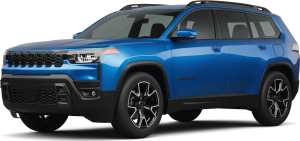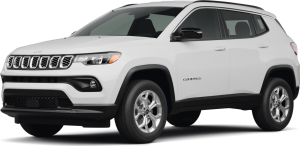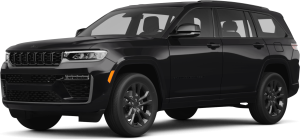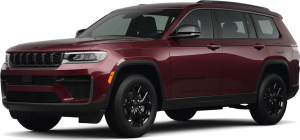
If you’re shopping for a three-row family SUV and you’ve landed on the Jeep Grand Cherokee and the Dodge Durango, the first thing to get straight is seating. The Durango seats seven in three rows on its GT and GT HEMI trims, while the base SXT is a five-seat, two-row model (Dodge Canada, 2026). The Jeep Grand Cherokee splits by body instead: the regular Grand Cherokee is a two-row, five-seat SUV, and the three-row version is the longer Grand Cherokee L (Jeep Canada, 2026).
So for a fair “three-row family” comparison, this guide lines up the Grand Cherokee L against the Durango, because those are the two that actually seat the whole family. Both are built by Stellantis, both offer serious winter traction, and both can tow a trailer to the lake. This guide breaks down seating and space, towing and capability, engines and winter grip, price and value, and finally which one fits your family. Each section opens with a short answer for Sherwood Park and Edmonton buyers.
Key Takeaways
- The standard Jeep Grand Cherokee is a two-row, five-seat SUV; the three-row version is the longer Grand Cherokee L (Jeep Canada, 2026). For three rows, compare the Grand Cherokee L, not the base Grand Cherokee.
- The Dodge Durango seats seven in three rows on the GT and GT HEMI trims (the base SXT is a five-seat, two-row model) and is the towing leader of the two, rated up to 8,700 lb (3,946 kg) with the available HEMI V8 and Tow ‘n Go package (Dodge Canada, 2026).
- Both offer all-wheel drive or 4x4, which matters more in Alberta than almost anywhere in Canada, and both suit winter, towing, and mountain road trips.
- The Grand Cherokee L leans more refined and trail-capable; the Durango leans more muscular and tow-focused. Your use case decides the winner.
How Do the Grand Cherokee and Durango Differ?
The clearest difference between these two is body and seating: the Durango is a three-row, seven-seat SUV on the GT and GT HEMI trims (the base SXT is a five-seat, two-row model), while the Jeep splits into a two-row Grand Cherokee and a three-row Grand Cherokee L (Jeep Canada, 2026; Dodge Canada, 2026). That single fact reshapes the whole comparison, so it’s worth saying again up front.
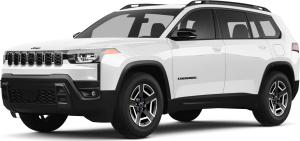
The Grand Cherokee is Jeep’s flagship mid-size SUV. In standard two-row form it seats five and emphasizes a premium cabin, advanced 4x4 systems, and available air suspension. The Grand Cherokee L stretches the wheelbase to add a usable third row, giving you Jeep refinement with six or seven seats (Jeep Canada, 2026).
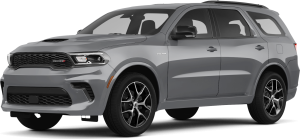
The Durango takes a different path. On the GT and GT HEMI trims it’s a three-row, seven-seat SUV, with a tougher, more performance-minded character and the broadest V8 lineup in the class. Where the Jeep feels like a refined trail-and-road SUV, the Durango feels like a muscle car that happens to seat seven. Both are great Alberta family vehicles, but they aim at slightly different drivers.
Browse our Jeep Grand Cherokee inventory and our Dodge Durango inventory to see which trims and colours are on the ground right now at Sherwood Dodge.
How Do Seating and Cargo Space Compare?
For three rows, the matchup is the Grand Cherokee L versus the Durango, since the standard Grand Cherokee is two-row only (Jeep Canada, 2026). The Grand Cherokee L seats six, or seven in the L Altitude trim (Jeep Canada, 2026), and the Durango seats seven on its GT and GT HEMI trims (Dodge Canada, 2026). Both give you a flat-folding setup for hauling gear. The real differences show up in cargo room and third-row usability.
Here’s how the two three-row options line up:
| Spec | Jeep Grand Cherokee L | Dodge Durango |
|---|---|---|
| Standard rows / seats | 3 rows / up to 7 | 3 rows / 7 (GT and GT HEMI trims); base SXT: 2 rows / 5 |
| Base Grand Cherokee (note) | 2 rows / 5 seats | n/a |
| Max cargo (seats folded) | ≈2,396 L (84.6 cu ft) | 2,409 L (85.1 cu ft) |
| Character | Refined, trail-capable | Muscular, tow-focused |
One more time, because it matters at the dealership: if you only need two rows and five seats, the standard Grand Cherokee is a strong, more compact choice. The moment you need that third row, you’re looking at the Grand Cherokee L or the Durango. Don’t assume the base Grand Cherokee will fit a third row, because it won’t.
For families who regularly carry six or seven, both three-row options work. Buyers who load bikes, hockey bags, and luggage for a mountain trip should sit in the third row and load the cargo area in person, since that’s where the day-to-day difference is felt.
Which One Tows More for Alberta Families?
The Durango is the towing leader of the two: its available HEMI V8 with the Tow ‘n Go package is rated up to 8,700 lb (3,946 kg), well above the Grand Cherokee’s maximum of 6,200 lb (2,812 kg), while the Jeep counters with strong-but-lighter ratings tuned for its more refined setup (Dodge Canada, 2026; Jeep Canada, 2026). For Alberta buyers towing a trailer or boat, this is often the deciding spec.
The Durango’s V8 trims, fitted with the Tow ‘n Go package, post some of the highest tow ratings in the three-row segment, up to 8,700 lb (3,946 kg) (Dodge Canada, 2026). That covers most travel trailers, utility trailers, and a loaded enclosed trailer. If you’re pulling a fishing boat to Pigeon Lake or a sled trailer toward the foothills, the HEMI Durango handles it without drama.
The Grand Cherokee L tows a respectable load too with the right tow package, but its ceiling of up to 6,200 lb (2,812 kg) sits below the V8 Durango (Jeep Canada, 2026). For lighter trailers, popup campers, and small boats, it’s plenty. If your towing is occasional and modest, the Jeep’s rating likely covers it while giving you a more car-like ride the rest of the time.
If you tow regularly, ask us about the right package on each model. Our team serving Edmonton and Sherwood Park can match the trailer you actually own to the trim and tow setup that fits, instead of guessing from a brochure.
How Do the Engines and Winter Traction Compare?
Both SUVs offer all-wheel drive or 4x4 across the range, which is the single most important trait for Alberta winters, and both back it with strong engine choices, from efficient V6s to the Durango’s available HEMI V8 (Dodge Canada, 2026; Jeep Canada, 2026). In our climate, that traction matters more than horsepower.
The Grand Cherokee L leans into Jeep’s 4x4 heritage. Depending on trim, it offers selectable 4x4 systems and available air suspension that raises ride height for deep snow or rough approaches. That’s a genuine edge if your winter includes unplowed back roads, a cabin driveway, or a ski-hill parking lot that never gets graded.
The Durango answers with available all-wheel drive on every trim and a broader V8 menu, including HEMI options the Jeep doesn’t offer in this body. Its AWD system sends power where grip exists, which helps on icy on-ramps and packed-snow side streets around Sherwood Park and Edmonton alike.
Two practical notes from our service team. First, budget for a dedicated set of winter tires on either SUV, because AWD and 4x4 help you go, but winter tires help you stop. Second, a block heater is worth using when overnight lows drop below roughly minus 20 C, on both models.
How Do Price and Value Compare?
Both line up as premium mid-size SUVs, and as a general rule the three-row Grand Cherokee L and the Durango start above the two-row base Grand Cherokee, with final pricing shaped by trim, engine, and current incentives (Jeep Canada, 2026; Dodge Canada, 2026). Because real-world pricing moves week to week, we don’t quote a specific figure here.
A few things worth knowing about pricing in Alberta:
- The standard Grand Cherokee is the lower entry point of the Jeep lineup, but it’s the two-row model. Stepping to the three-row Grand Cherokee L raises the starting price.
- Durango pricing climbs with the engine, from the V6 up through the HEMI V8 trims, as you’d expect.
- Freight, PDI, and fees are on top of the advertised vehicle price, as with any new vehicle.
- In-stock often beats a factory order on timing and incentives, since the units already on our lot carry the current offers.
Because pricing, inventory, and incentives change constantly, the honest answer to “what will mine cost out the door” is a quick conversation on a specific vehicle. See current Grand Cherokee inventory or current Durango inventory, or talk to our team for an exact, all-in number.
Which One Fits Your Family?
The short version: pick the Durango if towing and three-row muscle top your list, and pick the Grand Cherokee L if you want three rows wrapped in Jeep refinement and trail capability (Dodge Canada, 2026; Jeep Canada, 2026). Both are excellent Alberta family SUVs, so this is about fit, not a loser.
Here’s how we’d guide it on the lot:
- You tow a heavier trailer or boat? Lean Durango, especially a HEMI V8 with the tow package.
- You want three rows plus a premium, trail-ready cabin? Lean Grand Cherokee L, ideally with the 4x4 and air-suspension options.
- You only need two rows and five seats? The standard Grand Cherokee is the more compact, lower-cost pick, just remember it’s two-row.
- Winter capability is the priority? Both deliver with AWD or 4x4 plus proper winter tires, so let towing and seating break the tie.
The best way to choose is to drive them back to back. Our team serving Edmonton and Sherwood Park can line up a Grand Cherokee L and a Durango side by side so you can compare the third row, the cargo area, and the feel of each before you decide.
Frequently Asked Questions
Does the Grand Cherokee have three rows?
Not in standard form. The regular Jeep Grand Cherokee is a two-row, five-seat SUV. The three-row version is the longer Grand Cherokee L, which adds a usable third row for up to seven passengers (Jeep Canada, 2026). If you need three rows from the Jeep lineup, look at the Grand Cherokee L, not the base Grand Cherokee.
Is the Dodge Durango or Jeep Grand Cherokee better for towing?
The Durango is the towing leader of the two, with available HEMI V8 models rated above what the Grand Cherokee L can pull (Dodge Canada, 2026). The Grand Cherokee L still tows a respectable load for lighter trailers and small boats, but its ceiling sits below the V8 Durango. For heavier trailers, the Durango is the stronger choice.
Which is better for Alberta winters, the Grand Cherokee or the Durango?
Both are well suited to Alberta winters. Each offers all-wheel drive or 4x4 across the range, and the Grand Cherokee L adds available air suspension for extra ground clearance. Whichever you choose, dedicated winter tires are the single best upgrade for cold-weather traction, since AWD helps you go but winter tires help you stop.
How many seats does the Dodge Durango have?
Five or seven, depending on the trim. The 2026 Durango GT and GT HEMI trims seat seven across three rows, while the base SXT is a five-seat, two-row model with a second-row bench (Dodge Canada, 2026). The SRT Hellcat Jailbreak is also listed with five seats. For a third row, choose a GT or GT HEMI trim.
Should I buy a Grand Cherokee L or a Durango for my family?
It depends on your priorities. Choose the Durango for maximum towing and three-row muscle, or the Grand Cherokee L for three rows with Jeep refinement and trail capability. If you only need two rows, the standard Grand Cherokee is a more compact, lower-cost option. The best test is driving them back to back at the dealership.