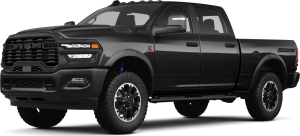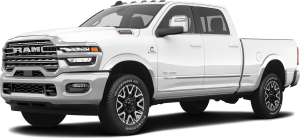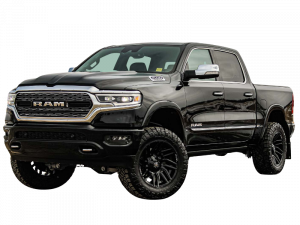
The short answer: pick the RAM 2500 if you tow and haul hard but stay within a three-quarter-ton truck’s limits, and step up to the RAM 3500 when you need maximum towing, maximum payload, or a dual-rear-wheel “dually” setup for the heaviest gooseneck and fifth-wheel work (RAM Canada, 2026). Both trucks share the same cab, the same available 6.7L Cummins turbo-diesel, and the same available 6.4L HEMI gas V8, so the real decision is about capability ceilings, not comfort.
For a lot of Strathcona County and Fort Saskatchewan buyers, that ceiling is the whole question. This guide breaks down towing and payload in plain numbers, explains when a 3500 dually actually earns its keep, compares the Cummins and HEMI for heavy-duty work, and helps you match the right truck to oil-patch, fleet, or personal towing duty.
Key Takeaways
- The RAM 3500 tows up to 36,610 lb (16,606 kg) and carries up to 7,590 lb (3,443 kg) of payload, versus up to 20,000 lb (9,071 kg) and 4,580 lb (2,077 kg) for the RAM 2500, plus an available dual-rear-wheel (dually) configuration the 2500 does not offer (RAM Canada, 2026).
- Both trucks offer the 6.7L Cummins turbo-diesel (High-Output: 430 hp / 1,075 lb-ft) and the 6.4L HEMI gas V8 (405 hp / 429 lb-ft). The engine choice is shared, the capability ceiling is not (RAM Canada, 2026).
- The 3500’s higher GVWR can change licensing and insurance considerations for some buyers, so it is worth confirming before you commit.
- For most personal towing, the 2500 is plenty; the 3500 is the call when you regularly run near the 2500’s limits or haul with a gooseneck.
What’s the Real Difference Between a RAM 2500 and 3500?
The real difference is capability ceiling, not creature comforts: the RAM 3500 is built to tow more, carry more, and accept a dual-rear-wheel axle, while the RAM 2500 covers the vast majority of three-quarter-ton work in a lighter, easier-to-live-with package (RAM Canada, 2026). Side by side in the lot, the single-rear-wheel versions look nearly identical.
Here is the honest framing we give buyers on the lot. The 2500 is a three-quarter-ton truck and the 3500 is a one-ton truck, and that class jump is where the extra towing, payload, and the dually option come from. Cab, interior tech, trim levels, and the engine menu carry across both, so you are not giving up comfort by choosing the lighter truck or buying luxury by choosing the heavier one.
What separates them is suspension and chassis. The 3500 runs heavier-duty rear suspension to support its higher ratings, which is exactly what you want under a loaded gooseneck and exactly what you do not need if your trailer is well within a 2500’s range.
Browse our new RAM 2500 inventory and our new RAM 3500 inventory to compare configurations on the ground right now at Sherwood Dodge.
RAM 2500 vs 3500: Towing and Payload Compared
The headline gap is capability: the RAM 3500 tows up to 36,610 lb (16,606 kg) and carries up to 7,590 lb (3,443 kg) of payload, versus up to 20,000 lb (9,071 kg) and 4,580 lb (2,077 kg) for the RAM 2500, with the biggest separation showing up on dually 3500 models set up for gooseneck and fifth-wheel hauling (RAM Canada, 2026). Both trucks tow more than most owners will ever use.
Here is how the two compare at a glance. Confirm every number against RAM Canada on publish day, because ratings shift by cab, bed, axle ratio, and engine.
| Spec | RAM 2500 | RAM 3500 |
|---|---|---|
| Class | Three-quarter-ton | One-ton |
| Max towing (diesel) | Up to 20,000 lb (9,071 kg) | Up to 36,610 lb (16,606 kg) |
| Max payload (gas V8) | Up to 4,580 lb (2,077 kg) | Up to 7,590 lb (3,443 kg) |
| Max GCWR | High | Highest |
| Dually (dual rear wheel) | Not available | Available |
| Engines | 6.7L Cummins diesel (430 hp / 1,075 lb-ft) / 6.4L HEMI gas (405 hp / 429 lb-ft) | 6.7L Cummins diesel (430 hp / 1,075 lb-ft) / 6.4L HEMI gas (405 hp / 429 lb-ft) |
The practical read: if your loaded trailer, plus passengers and gear, sits comfortably under a 2500’s numbers, the 2500 is the right truck and the cheaper truck to run. If you regularly load to the edge of a three-quarter-ton’s limits, or you tow with a gooseneck hitch in the bed, the 3500’s higher ceiling and dually option are what keep you legal and stable.
SRW vs Dually: When Do You Actually Need a RAM 3500 Dually?
You need a dual-rear-wheel RAM 3500 when your payload and trailer tongue or pin weight push past what a single-rear-wheel truck can safely carry, which in practice means the heaviest fifth-wheels, large goosenecks, and loaded flat decks (RAM Canada, 2026). For everything lighter, a single-rear-wheel truck is the better daily driver.
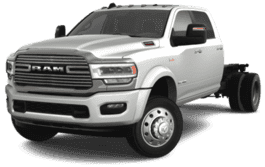
A dually adds a second tire on each side of the rear axle. That extra rubber spreads heavy loads across more contact area, improves stability under a tall fifth-wheel in a crosswind, and raises the truck’s payload ceiling. If you haul a big RV or run equipment on a gooseneck out to a lease site, that stability is not a luxury, it is the difference between a planted truck and a nervous one.
The trade-offs of running a dually
A dually is wider, harder to park, and more expensive on tires, so it is the wrong choice if you do not need the capacity. In our experience on the lot, plenty of buyers ask for a dually because it looks the part, then realize a single-rear-wheel 3500 or even a 2500 covers their actual trailer with room to spare. The honest test is your real loaded weight, not the truck’s image.
A practical Alberta note: a narrower single-rear-wheel truck is easier to live with on rural approaches, snow-packed shoulders, and tight yard sites around Fort Saskatchewan. Choose the dually for the load, not for the look, and you will be happier with it for years.
Cummins Diesel vs HEMI Gas: Which Engine for Heavy-Duty Work?
Both the RAM 2500 and 3500 offer the 6.7L Cummins turbo-diesel (High-Output: 430 hp and 1,075 lb-ft of torque) and the 6.4L HEMI gas V8 (405 hp and 429 lb-ft), and the choice comes down to how hard and how far you tow: the Cummins delivers the high torque and long-haul efficiency that heavy, frequent towing rewards, while the HEMI is the lower up-front cost for lighter-duty use (RAM Canada, 2026).
The 6.7L Cummins inline-six is the heavy-hauler’s engine. Its strength is torque low in the rev range, which is exactly what you feel pulling a loaded gooseneck up a grade, and diesels generally return better fuel economy when towing heavy over distance. For oil-patch, fleet, and anyone towing near the truck’s limits regularly, the Cummins is usually the answer.
The 6.4L HEMI gas V8 is the value engine. It costs less up front, it is simpler and cheaper to maintain, and for lighter or occasional towing it does the job without the diesel premium. If your heavy-duty truck spends more days empty than loaded, or your towing is seasonal, the HEMI can be the smarter financial call.
Running a diesel through an Alberta winter
Cold-weather diesel operation is real, but it is routine for Alberta owners who plan for it. In deep cold, plug in the block heater, use winter-rated (treated) diesel to prevent fuel gelling, and give the truck a moment to warm up before loading it hard. Our service team sees these trucks start through Strathcona County winters every year, and the difference between a hard morning and an easy one is almost always preparation, not the engine.
Oil-Patch and Fleet vs Personal Towing: Which RAM Fits?
For oil-patch and fleet duty that runs heavy and often, the RAM 3500, frequently in dually form with the Cummins, is the right tool; for personal towing of a travel trailer, boat, or equipment trailer, the RAM 2500 usually covers the job with margin to spare (RAM Canada, 2026). Match the truck to the real workload, not the worst-case daydream.
Out of Strathcona County and Fort Saskatchewan, the work-truck pattern is clear. Crews hauling equipment trailers and skid-mounted gear to lease sites, running near payload limits with tools and fuel aboard, lean to the 3500 and the Cummins for the capacity and the towing economy on long runs. If you tow heavy for a living, buy the ceiling.
The personal-towing buyer is a different story. A 24-foot travel trailer to the lake, a boat to Pigeon Lake, a single sled trailer or a small equipment trailer for the acreage, all of that typically sits well inside a 2500’s range. Buying a one-ton dually for a load a three-quarter-ton handles easily just means a wider, thirstier truck and no real benefit.
One more factor worth raising before you sign: the 3500’s higher GVWR can change licensing and insurance considerations for some buyers and uses, so confirm where your intended setup lands before you commit. Our team serving Edmonton and Sherwood Park can walk you through which truck and configuration matches your trailer and your work.
Which RAM Heavy Duty Should You Buy?
Buy the RAM 2500 for personal and light-commercial towing that stays within a three-quarter-ton’s limits, and buy the RAM 3500 when you need the highest towing and payload or a dually for gooseneck and fifth-wheel hauling (RAM Canada, 2026). The engine choice, Cummins or HEMI, layers on top of that decision.
Here is the short version:
- Tow a travel trailer, boat, or light equipment trailer? The RAM 2500 covers it, usually with the HEMI for value or the Cummins if you tow often.
- Run heavy and often for work, or haul a big fifth-wheel or gooseneck? The RAM 3500, often a dually with the Cummins, is the tool for the job.
- Not sure where your load lands? Bring your real loaded weight, not a guess, and we will match the truck to it.
The best way to choose is to see them side by side and put your actual numbers against each truck’s ratings. Browse our RAM 3500 inventory, compare it with the RAM 2500, and our team will help you land on the right heavy duty and the current incentive. Pricing, freight, PDI, and incentives move week to week, so the honest out-the-door answer is a quick conversation on a specific truck.
Frequently Asked Questions
What is the difference between a RAM 2500 and a RAM 3500?
The RAM 2500 is a three-quarter-ton truck and the RAM 3500 is a one-ton truck. The 3500 offers higher maximum towing and payload plus an available dual-rear-wheel (dually) configuration the 2500 does not offer (RAM Canada, 2026). Cab, interior, and the engine menu are shared, so the difference is capability, not comfort.
Do I need a RAM 3500 dually?
Only if your payload and trailer pin or tongue weight exceed what a single-rear-wheel truck can safely carry, which in practice means the heaviest fifth-wheels, large goosenecks, and loaded flat decks. For travel trailers, boats, and lighter equipment trailers, a single-rear-wheel 2500 or 3500 is the better, easier-to-park daily driver.
Cummins diesel or HEMI gas for a RAM heavy duty?
Both the 2500 and 3500 offer the 6.7L Cummins turbo-diesel and the 6.4L HEMI gas V8. The Cummins suits heavy, frequent towing with its high torque and better towing fuel economy over distance; the HEMI costs less up front and suits lighter or occasional towing. Match the engine to how hard and how far you tow.
Does a RAM 3500 need a special licence or insurance in Alberta?
The RAM 3500’s higher GVWR can change licensing and insurance considerations for some buyers and uses, so it is worth confirming where your specific truck and trailer setup lands before you buy. The exact requirements depend on weight and how the truck is used, so check before you commit rather than assuming.
Can a RAM 2500 tow a fifth-wheel?
Yes, a properly equipped RAM 2500 can tow many fifth-wheels, but the heaviest fifth-wheels and large goosenecks are where the RAM 3500’s higher ratings and available dually configuration matter. The right answer depends on your trailer’s loaded pin weight and total weight, so compare those against each truck’s ratings before deciding.