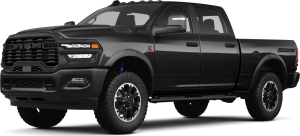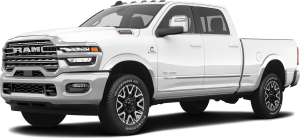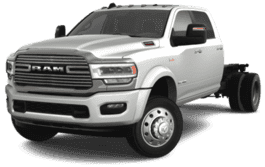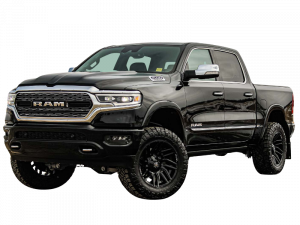

For 2026, the RAM 2500 gives you two very different ways to pull a trailer: the available 6.7L Cummins Turbo Diesel, now making 430 horsepower and a massive 1,075 lb-ft of torque, or the standard 6.4L HEMI V8 at 405 horsepower. The Cummins is the most powerful version of that engine RAM has ever put in a 2500, with the high-output diesel now standard across the half-ton-heavy lineup (The Autopian, 2025). For Alberta owners who tow heavy, run a fleet, or face real winter, the engine you choose changes the truck more than any trim or package does.
This guide compares the Cummins and the HEMI on the numbers that matter for Alberta hauling: torque, towing, payload, fuel, cold-weather starting, and total cost to own. Sherwood Dodge sells and services both engines in Sherwood Park, and these are the questions our HD buyers actually ask us on the lot.
Key Takeaways
- The 2026 RAM 2500 Cummins makes 430 hp and 1,075 lb-ft and tows up to 9,072 kg (20,000 lb); the 6.4L HEMI makes 405 hp and 429 lb-ft and tows up to 8,047 kg (17,740 lb) (RAM, 2026).
- The HEMI actually carries more in the bed: up to 2,078 kg (4,580 lb) of payload versus about 1,633 kg (3,600 lb) for the Cummins (RAM, 2026).
- For 2026 the 2500 diesel is high-output only. The older 370 hp / 850 lb-ft standard-output Cummins was discontinued on the 2500.
- The Cummins is the better tool for heavy, frequent towing and cold-climate longevity; the HEMI is the better value for lighter, occasional loads.
Cummins vs HEMI: Which 2026 RAM 2500 Engine Should You Buy?
For most Alberta buyers, the answer comes down to how you actually use the truck. Buy the 6.7L Cummins if you tow heavy trailers regularly, run a business or fleet, or keep your trucks for ten-plus years. Buy the 6.4L HEMI if your towing is occasional and lighter, you want a lower purchase price, or you carry heavy payloads in the bed more than you pull big trailers.
The short version: the Cummins is a torque and towing machine built for the long haul, and the HEMI is a strong, simpler, less expensive workhorse. Both are legitimate Alberta trucks. The rest of this guide gives you the numbers behind that decision so you can match the engine to your trailer and your winter.
Browse our new RAM 2500 inventory to see which engines and configurations are on the ground right now at Sherwood Dodge.
What Are the 2026 RAM 2500 Cummins and HEMI Specs?
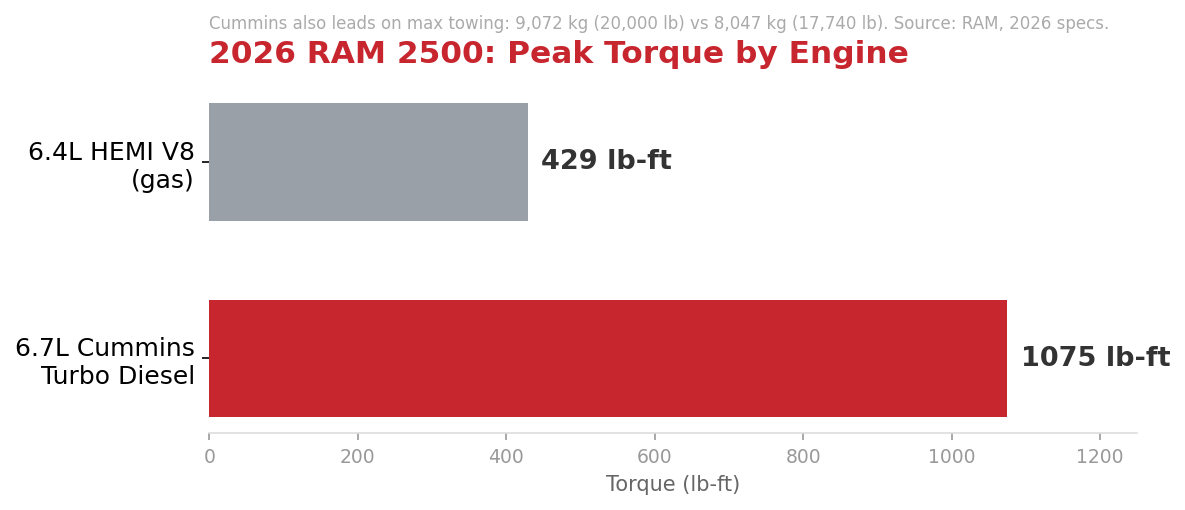
The 6.7L Cummins makes 430 hp and 1,075 lb-ft of torque, and the 6.4L HEMI V8 makes 405 hp and 429 lb-ft (RAM, 2026). Both engines now run through the eight-speed TorqueFlite HD automatic transmission, which RAM added two gears to for 2026 to improve both towing response and highway efficiency (The Autopian, 2025).
Here is the head-to-head at a glance:
| Spec | 6.7L Cummins Turbo Diesel | 6.4L HEMI V8 (gas) |
|---|---|---|
| Horsepower | 430 hp | 405 hp |
| Torque | 1,075 lb-ft (1,458 N·m) | 429 lb-ft (582 N·m) |
| Configuration | Inline-6, turbocharged | V8, naturally aspirated |
| Transmission | 8-speed TorqueFlite HD | 8-speed TorqueFlite HD |
| Max towing | 9,072 kg (20,000 lb) | 8,047 kg (17,740 lb) |
| Max payload | ~1,633 kg (3,600 lb) | ~2,078 kg (4,580 lb) |
The torque gap is the headline. At 1,075 lb-ft, the Cummins makes roughly two and a half times the twist of the HEMI, and it makes peak torque down low at about 1,800 rpm where towing actually happens (SunCent Auto, 2026). That low-end pull is why a loaded diesel feels effortless on a grade while a gas truck has to rev and downshift to keep up.
One important 2026 change: the 2500 diesel is high-output only now. RAM standardized the high-output 6.7L across the 2500 lineup and dropped the older standard-output version that made 370 hp and 850 lb-ft (The Autopian, 2025). So when you order a 2026 RAM 2500 Cummins, you get the full 1,075 lb-ft straight from the factory.
How Much Can a 2026 RAM 2500 Tow? (Cummins vs HEMI)
The Cummins tows up to 9,072 kg (20,000 lb) and the HEMI tows up to 8,047 kg (17,740 lb) when each is properly equipped (RAM, 2026). Those are conventional and gooseneck/fifth-wheel maximums on best-case configurations, so your real number depends on cab, bed, axle ratio, and how the truck is optioned.
What does the Cummins ceiling cover? A large fifth-wheel RV, a loaded gooseneck equipment trailer, a triple-axle toy hauler, or a stacked trailer of building materials all sit under 9,072 kg with room to spare. For oil patch, agricultural, and construction work around Strathcona County and the Industrial Heartland, that headroom is the whole point of buying a diesel.
The HEMI’s 8,047 kg rating is still serious capability, covering most travel trailers, dump trailers, skid-steer loads, and dual-axle utility trailers. If you tow a 24- to 30-foot trailer a handful of times a year, the gas truck pulls it without complaint and saves you money up front.
There is one number that flips in the HEMI’s favour: payload. The gas 2500 carries up to about 2,078 kg (4,580 lb) in the bed versus roughly 1,633 kg (3,600 lb) for the diesel, because the Cummins itself is several hundred pounds heavier (RAM, 2026). If you haul pallets, gravel, or a heavy slide-in camper more than you pull a trailer, the HEMI is the stronger hauler on paper.
For heavy and frequent towing, ask us about the right axle ratio and the factory tow packages when you spec the truck. Our team can match the configuration to your trailer weight so you are not guessing. We also serve industrial and fleet buyers through our fleet department.
What Is the GCWR of a 2026 RAM 2500 Cummins?
GCWR is the gross combined weight rating, the maximum legal weight of the truck plus trailer plus everything loaded in both. On a properly equipped 2026 RAM 2500 Cummins, GCWR runs above 12,250 kg (about 27,000 lb), and it varies by cab, drivetrain, and rear axle ratio (Transport Canada, vehicle weight ratings).
GCWR matters more than the towing number alone, because the tow rating assumes a near-empty truck. Once you add passengers, fuel, a fifth-wheel hitch, and gear, your usable trailer weight shrinks. Transport Canada and the manufacturer set both GVWR (the truck alone) and GCWR (truck plus trailer) for every configuration, and staying under them is what keeps you legal and safe. When you are buying an HD truck for work, we will pull the exact GVWR and GCWR for your specific build so you know your real headroom before you sign.
What Is the Fuel Economy Difference Between Cummins and HEMI?
The diesel is meaningfully more efficient, especially while towing. Heavy-duty trucks over 3,856 kg GVWR are exempt from Canada’s EnerGuide fuel-economy ratings, so there is no official sticker number to quote (Natural Resources Canada, Fuel Consumption Guide).
In real-world Alberta driving, owners and dealers commonly report the Cummins returning roughly 20 to 23 mpg on the highway unloaded, versus about 14 to 17 mpg for the 6.4L HEMI (Beadle’s Chrysler Center, 2026). The gap widens under load: a diesel holds its economy far better with a heavy trailer than a gas V8 that has to work harder to make the same pull.
Two things temper the diesel’s fuel savings in Alberta: diesel and gasoline pump prices move independently, so the per-litre math changes week to week, and the Cummins needs diesel exhaust fluid (DEF), a small ongoing cost. For high-kilometre, towing-heavy use the diesel still usually wins over the life of the truck, but for a light-duty driver the gap can be smaller than expected.
What Maintenance Does the 2026 Cummins Emissions System Need?
The 2026 Cummins uses a modern diesel emissions package: a diesel particulate filter (DPF), exhaust gas recirculation (EGR), and a selective catalytic reduction (SCR) system that injects diesel exhaust fluid (DEF) to cut NOx (SunCent Auto, 2026). In plain terms, that means three owner-facing realities you should plan for.
First, DEF: you top up a separate tank periodically, and running out drops the engine into reduced power until you refill. Second, regeneration: the DPF traps soot and burns it off automatically in a “regen” cycle, but trucks that mostly do short, cold trips can struggle to complete one, which is worth knowing for a winter city driver. Third, the EGR and SCR hardware are part of regular diesel maintenance and should be serviced by a shop that knows the platform.
The practical takeaway: a diesel is not “more fragile,” but it has more systems than a gas truck and it rewards proper maintenance. Our RAM diesel service in Sherwood Park team handles DEF, regen issues, and the full Cummins emissions system in-house, which matters when you depend on the truck for work.
Which RAM 2500 Engine Is Best for Alberta Cold Weather?
Both engines start in Alberta winters, but the diesel needs more cold-weather preparation, and a block heater is close to mandatory for the Cummins in deep cold. A Cummins will generally fire down to roughly minus 29 C (about minus 20 F) without help, but it starts far more easily, warms faster, and wears less when the block heater is plugged in below those temperatures (DodgeRam.org, cold-weather diesel operation). For a province where Edmonton has set record-cold lows, that is not a fringe scenario.
Here is what cold-weather diesel ownership actually looks like in Alberta:
- Plug in the block heater below about minus 20 C. Three to four hours on the heater before start makes a night-and-day difference in cold starts and cabin warm-up (DodgeRam.org). Many owners simply put it on a timer overnight.
- Run winter diesel and a fuel conditioner. Diesel can gel in extreme cold; Alberta stations sell winter-blended fuel, and a conditioner adds margin on the coldest nights.
- Keep the batteries healthy. Diesels crank hard and lean on strong batteries in the cold, so a weak battery shows up first in January.
The 6.4L HEMI is the simpler cold-weather story: it has no DEF, no DPF regen, and no gelling concern, so it is more forgiving for a driver who cannot always plug in. If you park outdoors with no power, do mostly short trips, or just want the least winter fuss, the HEMI has a real advantage here.
A note on block heater installs: every diesel RAM 2500 comes block-heater equipped from the factory, and what most Alberta owners need is simply an outlet to plug into, plus a heavy-duty extension cord rated for cold. If you need a heater cord replaced or a timer set up, our service team can sort it.
Is the Cummins Worth the Price Premium in Alberta?
The 6.7L Cummins adds a meaningful up-front premium over the HEMI, typically several thousand dollars on the build sheet, so the best move is to ask our team for the exact Canadian diesel option price on the configuration you want. Based on current inventory, a 2026 RAM 2500 at Sherwood Dodge starts at $76,485 MSRP (as of June 2026), before freight, PDI, fees, and incentives.
Whether that premium pays back depends entirely on your kilometres and your loads. The diesel tends to make financial sense if you tow heavy or often, rack up high annual kilometres, run the truck as part of a business, or plan to keep it past 300,000 km, because a well-maintained Cummins is known to go the distance and it holds resale value strongly. The HEMI tends to win if your towing is light or occasional, your annual kilometres are modest, or you would rather put the price difference toward the truck itself.
For a working truck, also weigh the fuel savings and resale against the higher purchase price and the added DEF and emissions maintenance. The honest answer for a lot of Alberta buyers is that the Cummins is worth it when the truck earns its keep, and the HEMI is the smarter buy when it does not. Our team can lay out RAM 2500 financing options on both engines so you compare real monthly payments, not just sticker prices.
How Long Does a Cummins Engine Last?
A well-maintained 6.7L Cummins is widely regarded as capable of 480,000 km (300,000 miles) or more, and many reach far higher with disciplined maintenance (SunCent Auto, 2026). That longevity is a core reason buyers accept the higher purchase price: the engine is built to outlast the kind of use that wears out a gas V8.
The catch is that the longevity assumes the maintenance gets done: regular oil and filter changes, fuel filter service, DEF top-ups, healthy batteries, and attention to the emissions system. A neglected diesel does not magically last longer than a neglected gas engine. For high-kilometre Alberta owners, that durability is exactly why the diesel can be the cheaper truck over a decade despite costing more on day one.
The Bottom Line for Alberta RAM 2500 Buyers
The 2026 RAM 2500 makes both engines easy to recommend, but for different jobs. The 6.7L Cummins, with 430 hp, 1,075 lb-ft, and up to 9,072 kg of towing, is the right tool for heavy, frequent hauling and long-term, cold-climate ownership. The 6.4L HEMI, with 405 hp, more bed payload, and a lower purchase price, is the smarter buy for lighter loads and drivers who want simpler winters.
Here is the short version:
- Tow heavy, run a fleet, or keep trucks 10-plus years? Buy the Cummins.
- Tow light or occasionally, or want the lower price and simpler winter? Buy the HEMI.
- Carry heavy loads in the bed more than you tow? The HEMI’s higher payload may suit you better.
The best way to decide is to drive both and put your real trailer weight against the numbers. Browse our new RAM 2500 inventory at Sherwood Dodge, or ask our team to spec the engine, axle ratio, and tow package that fit your work and your budget.
Frequently Asked Questions
Is the 6.7L Cummins worth the price premium over the HEMI in Canada?
It depends on how you use the truck. The Cummins adds a significant up-front premium (commonly cited near US$12,995 on the build sheet; confirm the Canadian figure), and it pays back best if you tow heavy or often, drive high annual kilometres, run a business, or keep the truck past 300,000 km, thanks to better fuel economy while towing and strong resale (Beadle’s Chrysler Center, 2026). For light or occasional towing, the HEMI’s lower price usually makes it the smarter buy.
What’s the GCWR of a 2026 RAM 2500 Cummins?
A properly equipped 2026 RAM 2500 Cummins has a gross combined weight rating above roughly 12,250 kg (about 27,000 lb), and the exact number varies by cab, drivetrain, and rear axle ratio (Transport Canada vehicle weight ratings). GCWR is the maximum legal weight of the truck plus trailer plus everything loaded, so confirm the figure for your specific build before towing.
How long does a Cummins engine last?
A well-maintained 6.7L Cummins is widely regarded as capable of 480,000 km (300,000 miles) or more, with many examples going further on disciplined maintenance (SunCent Auto, 2026). The longevity depends on keeping up with oil, fuel filter, DEF, and emissions-system service, which is a major reason high-kilometre Alberta buyers choose the diesel.
Does the Cummins need a block heater plug-in below -20 C?
In Alberta cold, plugging in the block heater below about minus 20 C is strongly recommended. The Cummins will generally start down to roughly minus 29 C without help, but three to four hours on the block heater before start makes a night-and-day difference to cold starts, warm-up, and engine wear (DodgeRam.org cold-weather diesel operation). Every diesel RAM 2500 is block-heater equipped from the factory; you mainly need an outlet and a cold-rated extension cord.
What’s the fuel economy difference between Cummins and HEMI?
The diesel is meaningfully more efficient, especially while towing. Heavy-duty trucks are exempt from Canada’s official EnerGuide ratings, but in real-world driving owners commonly report the Cummins around 20 to 23 mpg highway versus about 14 to 17 mpg for the 6.4L HEMI (Beadle’s Chrysler Center, 2026). The gap widens under load, though diesel and gasoline pump prices and the diesel’s DEF cost affect the real-world math.
Sources
- “The New Ram 2500 Gets An ‘All-New’ 1,075 lb-ft Cummins Engine And Two More Gears,” The Autopian, 2025. Retrieved June 15, 2026.
- “6.7 Cummins HP & Torque by Year: Complete Specs and Guide,” SunCent Auto, 2026. Retrieved June 15, 2026.
- “2026 Ram 2500 Cummins vs HEMI: Which Engine Is Right for Your Work?,” Beadle’s Chrysler Center, 2026. Retrieved June 15, 2026.
- “Cold Weather Diesel Operation,” DodgeRam.org technical FAQ. Retrieved June 15, 2026.