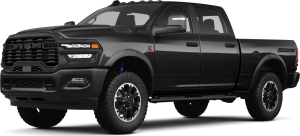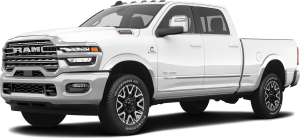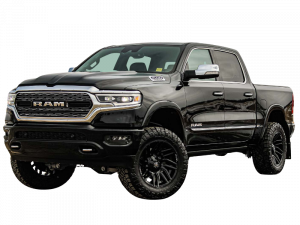
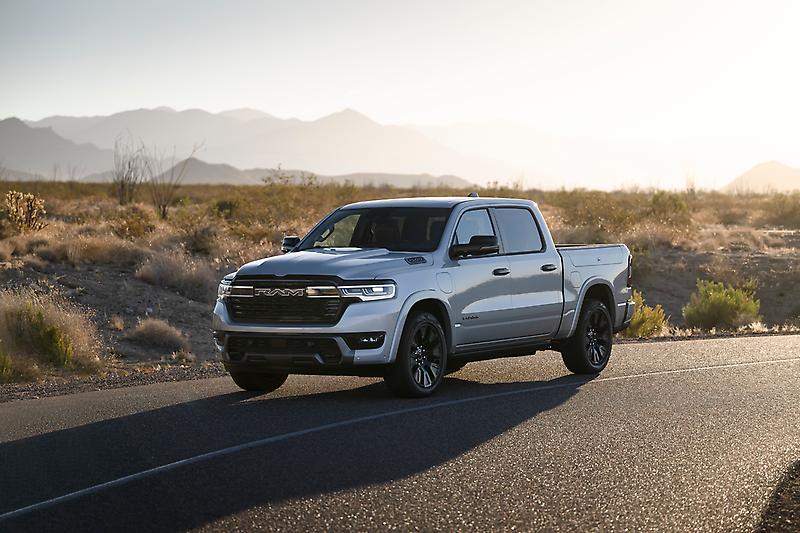
If you are cross-shopping the RAM 1500 against the Ford F-150 for 2026, the good news is that both are excellent half-ton trucks. Both tow heavy, both run advanced turbocharged and V8 engines, and both will get you through an Alberta winter on the right tires. The differences are in the details, and a few of those details changed in a big way for 2026. The headline: the legendary HEMI V8 is back in the RAM 1500, and RAM Canada now backs the truck with a 10-year/160,000 km powertrain warranty, double the coverage Ford offers (RAM Canada, 2026).
This guide compares the two trucks fairly on the things that actually matter to a Sherwood Park or Edmonton buyer: engines, towing, payload, warranty, resale, and how each one handles a January cold-soak. Sherwood Dodge sells and services the RAM 1500, so we are upfront about that, but the numbers below come straight from the manufacturers. Where the RAM wins, we will show you why. Where it is close, we will say so.
Key Takeaways
- The 2026 RAM 1500 brings the 5.7L HEMI V8 back (395 hp) alongside the 3.0L Hurricane twin-turbo I6, available in Standard Output (420 hp) and High Output (540 hp) (RAM Canada, 2026).
- The Ford F-150 counters with a strong lineup topped by the 3.5L EcoBoost V6 and a 5.0L V8, and posts a higher headline max tow rating (Ford Canada, 2026).
- RAM Canada’s 10-year/160,000 km powertrain warranty doubles Ford’s 5-year/100,000 km coverage on gas models (RAM Canada; Ford Canada, 2026).
- The RAM 1500 EcoDiesel is no longer offered; RAM replaced its torque and range with the Hurricane I6 (Stellantis, 2023 onward).
- Both trucks handle Alberta winters well with 4x4 and proper winter tires; a block heater is recommended either way below roughly minus 20 C.
Is the RAM 1500 or the F-150 the Better Truck for 2026?
For most Alberta buyers in 2026, it comes down to three questions: how much do you tow, how long do you plan to keep the truck, and where will you service it. The F-150 holds the higher single headline tow number, so if maximum trailer weight is your only metric, Ford has a real claim. The RAM 1500 answers with a broader standard engine choice (including the returning HEMI V8), a class-leading powertrain warranty, and a refined ride that many buyers prefer on the highway.
Neither truck is a wrong answer. They are the two best-selling full-size trucks in Canada for good reason. The rest of this article breaks down each category so you can match the truck to how you actually drive, not to a spec-sheet bragging right.
Browse our new RAM 1500 inventory to see which trims and engines are on the ground right now at Sherwood Dodge.
What Engines Does the 2026 RAM 1500 Offer?
The 2026 RAM 1500 runs a four-engine lineup, and the big news is the return of the V8. RAM confirmed it plainly: “the legendary HEMI V8 is back” (RAM Canada, 2026). Here is the lineup:
- 3.6L Pentastar V6 with eTorque makes 305 hp and 269 lb-ft, with mild-hybrid assist for smoother starts and stop-go efficiency.
- 5.7L HEMI V8 with eTorque makes 395 hp and 410 lb-ft. This is the engine buyers asked for: the classic V8 sound with modern mild-hybrid help.
- 3.0L Hurricane twin-turbo I6, Standard Output makes 420 hp and 469 lb-ft, and it carries the highest tow rating in the RAM 1500 lineup.
- 3.0L Hurricane twin-turbo I6, High Output makes 540 hp and 521 lb-ft for buyers who want maximum power.
All four pair with an 8-speed TorqueFlite automatic and your choice of rear-wheel drive or 4x4. For Alberta, you will want the 4x4.
The takeaway for cross-shoppers: the RAM 1500 gives you a genuine V8 option (the HEMI) and two outputs of a modern twin-turbo six. That breadth of standard powertrain choice is one of the RAM’s strongest cards in 2026.
Is the RAM 1500 EcoDiesel Still Available for 2026?
No. The RAM 1500 EcoDiesel is no longer offered. Stellantis ended production of the 3.0L EcoDiesel V6 (the last of those engines were built in early 2023), and it does not return for the 2026 model year (SlashGear, 2025).
If you specifically wanted the EcoDiesel for its fuel economy and long highway range, here is the practical replacement: the 3.0L Hurricane twin-turbo I6 Standard Output. It produces 420 hp and 469 lb-ft and tows up to 11,610 lb (5,267 kg) when properly equipped, which exceeds what the EcoDiesel could pull (RAM Trucks, 2026). You give up the diesel’s range advantage, but you gain horsepower and a higher tow ceiling.
For buyers who genuinely need diesel torque and the towing stability that comes with it, that need now lives in the heavy-duty lineup. If you need heavy-duty capability, see our RAM 2500 Cummins vs HEMI guide.
What Engines Does the 2026 Ford F-150 Offer?
In fairness to the cross-shop, the F-150 lineup is deep and capable. For 2026 Ford offers a range built around the 2.7L EcoBoost V6, the 3.5L EcoBoost V6, a 5.0L V8, and the 3.5L PowerBoost full hybrid (Ford Canada, 2026).
The 3.5L EcoBoost is the workhorse of the range, rated at roughly 400 hp and 500 lb-ft, and it anchors Ford’s highest tow figures. The 5.0L V8 remains for buyers who want a naturally aspirated eight, and the PowerBoost hybrid pairs strong torque with an available onboard generator that many trades and campers love.
The honest summary: Ford’s lineup is excellent, and the PowerBoost hybrid in particular is a feature RAM does not directly match in the half-ton. Where the comparison tilts toward RAM is the return of a true V8 (the HEMI) as a mainstream choice and, as you will see next, the warranty.
RAM 1500 vs F-150: How Do Towing and Payload Compare?
This is where Ford lands its strongest punch. The F-150’s headline maximum tow rating, with the 3.5L EcoBoost and the right configuration, reaches about 13,500 lb (6,124 kg) (Ford Canada, 2026). The RAM 1500’s best, with the Hurricane Standard Output, is 11,610 lb (5,267 kg) (RAM Trucks, 2026). On the single biggest tow number, Ford wins.
Here is the comparison at a glance:
| Spec | 2026 RAM 1500 | 2026 Ford F-150 |
|---|---|---|
| Best engine for towing | 3.0L Hurricane SO (420 hp) | 3.5L EcoBoost (≈400 hp) |
| Max tow (properly equipped) | 11,610 lb / 5,267 kg | ≈13,500 lb / 6,124 kg |
| V8 option | 5.7L HEMI (395 hp) | 5.0L V8 |
| Hybrid option | eTorque mild-hybrid | PowerBoost full hybrid |
| Powertrain warranty | 10 yr / 160,000 km | 5 yr / 100,000 km |
So how should you read that table? If your trailer sits near the top of the half-ton range, the F-150’s extra capacity is a genuine advantage and worth a hard look. For the large majority of buyers towing a travel trailer, a boat to Pigeon Lake, or a sled trailer to the foothills, both trucks have far more capacity than the load requires, and the decision shifts to warranty, ride, and service.
A quick note on payload: the RAM 1500 offers up to roughly 2,360 lb (1,071 kg) of payload when configured for it (RAM Trucks, 2026). Both trucks cover the gravel, gear, and firewood that a typical Alberta weekend demands.
If you tow regularly, the smartest move is to bring your trailer specs to our team. Our Edmonton RAM dealer staff can match the engine, axle ratio, and towing package to your actual load rather than a spec-sheet maximum.
RAM vs Ford Warranty: Which Truck Is Covered Longer?
This is the clearest win for RAM in 2026, and it is straight from both manufacturers. The 2026 RAM 1500 carries a 10-year or 160,000 km powertrain limited warranty (RAM Canada, 2026). The 2026 Ford F-150 gas models carry a 5-year or 100,000 km powertrain warranty (Ford Canada, 2026). RAM’s coverage is double the years and 60 percent more distance.
Two honest caveats so you can compare apples to apples:
- RAM’s 10-year coverage is for retail customers only and is non-transferable (except where provincial law requires otherwise, including Quebec, Nova Scotia, and Saskatchewan) (RAM Canada, 2026). It applies to the original buyer or lessee of a new 2026 truck. Fleet purchases are excluded.
- Ford’s powertrain warranty is transferable, which can help resale if you sell before it expires.
For a buyer who keeps a truck long-term (and many Alberta truck owners do), that extra five years of RAM powertrain protection is real money and real peace of mind through the high-mileage years. For a buyer who trades every two or three years, Ford’s transferability is the more useful feature. Match the warranty structure to how long you actually keep your trucks.
Which Truck Holds Its Value Better in Canada?
Both the RAM 1500 and the F-150 are strong on resale, and full-size trucks as a class hold value better than almost any other segment. Canadian Black Book reports that vehicles retained an average of 67.5 percent of their original MSRP after four years in its most recent awards cycle, with trucks consistently near the top (Canadian Black Book, 2025).
Between these two specific trucks, residual values move year to year with trim, mileage, engine, and incentives, so we are not going to claim a definitive winner here. What we can say fairly: both nameplates have deep, stable used-truck demand in Alberta, and a well-kept 4x4 in a popular configuration from either brand will hold value well. If resale is a priority, the levers that matter most are common to both: pick a desirable engine and 4x4, keep the mileage reasonable, and stay on top of maintenance.
Which Truck Starts Better in Alberta Cold?
Honestly, both modern trucks start reliably in deep cold when they are maintained and plugged in. Neither the HEMI, the Hurricane, nor Ford’s EcoBoost and V8 engines have a cold-start weakness that should swing your decision. What matters far more in our climate is preparation, and the rules are the same for both brands.
Three things from our service team that apply to any half-ton in an Alberta winter:
- Use the block heater below roughly minus 20 C. A warm engine block starts more easily, reduces cold-start wear, and gets you heat faster. Most trucks are equipped for one; confirm the cord on your specific truck.
- Watch the battery. Cold-soaked batteries lose cranking power fast. A battery that was marginal in October will be the thing that strands you in January. Have it tested in the fall.
- Run dedicated winter tires. This is the single biggest safety upgrade for either truck. Transport Canada and provincial safety guidance consistently show that winter tires improve traction and shorten stopping distances on snow and ice compared with all-seasons.
The 4x4 question is straightforward: in Alberta, get the 4x4 on either truck. Both RAM and Ford offer capable four-wheel-drive systems that send power where grip is, which is exactly what you want on an unplowed residential street or a highway on-ramp after freezing rain. The RAM 1500 pairs that 4x4 with a coil-spring (and available air) rear suspension that many buyers find rides better on frost-heaved winter roads, which is a comfort point worth a test drive.
Can I Service a RAM 1500 at Any Dealer in Alberta?
You can service a RAM 1500 at any authorized Chrysler, Dodge, Jeep, and RAM dealer in Alberta, and there are many across the Edmonton metro and the province. That broad service network is a practical advantage of buying a mainstream truck: parts are stocked, technicians are factory-trained, and warranty work is handled in-network wherever you travel.
For Sherwood Park and Edmonton owners, the local angle is the real benefit. Buying and servicing at the same nearby dealer means your service history lives in one place, your warranty work is straightforward, and the people who sold you the truck are the people who keep it running. That continuity matters most during the 10-year powertrain warranty window, when you want one trusted shop tracking the truck over the long haul.
Based on current inventory, the 2026 RAM 1500 starts at $67,700 MSRP at Sherwood Dodge (as of June 2026), before freight, PDI, and incentives. Not sure which RAM 1500 engine and trim fit your budget and your trailer? Our team can lay out RAM 1500 financing options across the lineup so you can compare real monthly payments, not just sticker prices.
The Bottom Line: RAM 1500 vs F-150 for Alberta Buyers
Both trucks are genuinely excellent, and you would be well served by either. Here is the fair, short version:
- Choose the Ford F-150 if your top priority is the highest possible tow rating, or you specifically want the PowerBoost full hybrid and its onboard generator.
- Choose the RAM 1500 if you want a true V8 (the returning HEMI) or a modern twin-turbo six, the longest powertrain warranty in the class at 10 years/160,000 km, and a ride many buyers prefer on rough winter roads.
- Either way in Alberta: get the 4x4, run winter tires, and use the block heater in deep cold.
The best way to decide is to drive the RAM 1500 and feel the difference for yourself. Browse our new RAM 1500 inventory at Sherwood Dodge, or talk to our team about which engine, trim, and current incentive fit how you actually use your truck.
Frequently Asked Questions
Is the RAM 1500 better than the F-150 for towing?
Not on the single highest number. The Ford F-150’s max tow rating, with the 3.5L EcoBoost and the right configuration, reaches about 13,500 lb (6,124 kg), while the RAM 1500’s best is 11,610 lb (5,267 kg) with the Hurricane Standard Output engine (Ford Canada; RAM Trucks, 2026). For most buyers, both trucks far exceed what their trailer actually weighs, so warranty, ride, and service often matter more than the headline tow figure.
Which truck holds its value better in Canada?
Both the RAM 1500 and the Ford F-150 are strong on resale, and full-size trucks retain value better than most segments (Canadian Black Book reported an average 67.5 percent retained value after four years across vehicles in its latest awards). Between these two specific trucks, residuals shift year to year with trim, engine, mileage, and incentives, so neither has a permanent edge. A well-kept 4x4 in a popular configuration from either brand holds value well in Alberta.
What’s the warranty difference between RAM and Ford?
The 2026 RAM 1500 comes with a 10-year/160,000 km powertrain limited warranty, while the 2026 Ford F-150 gas models carry a 5-year/100,000 km powertrain warranty (RAM Canada; Ford Canada, 2026). RAM’s coverage is double the years. The trade-off: RAM’s 10-year coverage is for the original retail buyer and is non-transferable in most provinces, whereas Ford’s powertrain warranty is transferable, which can help if you sell early.
Which has better cold-weather starting?
In practice, both start reliably in deep Alberta cold when maintained and plugged in; neither the RAM’s HEMI and Hurricane engines nor Ford’s EcoBoost and V8 engines have a cold-start weakness that should decide your purchase. What matters most is preparation: use the block heater below roughly minus 20 C, have the battery tested in the fall, and run dedicated winter tires on whichever truck you choose.
Can I service a RAM 1500 at any dealer in Alberta?
Yes. You can service a RAM 1500 at any authorized Chrysler, Dodge, Jeep, and RAM dealer across Alberta, with many locations throughout the Edmonton metro. For Sherwood Park and Edmonton owners, servicing at one nearby dealer keeps your full history in one place and makes warranty work straightforward, which matters most across the 10-year powertrain warranty window.
Sources
- “2026 RAM 1500 Powertrain Limited Warranty,” RAM Canada. Retrieved June 15, 2026.
- “2026 RAM 1500,” RAM Canada (engine lineup and HEMI return). Retrieved June 15, 2026.
- “2026 RAM 1500 Capability: Engines, Payload, Towing,” RAM Trucks. Retrieved June 15, 2026.
- “Why Was the RAM 1500 EcoDiesel Discontinued?,” SlashGear, 2025. Retrieved June 15, 2026.
- “Canadian Black Book Announces 2025 Best Retained Value Awards,” Canadian Black Book, 2025. Retrieved June 15, 2026.