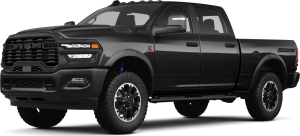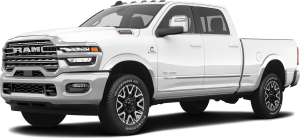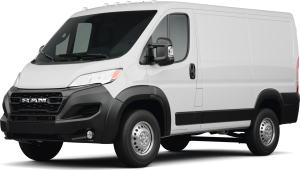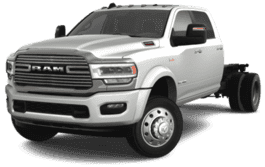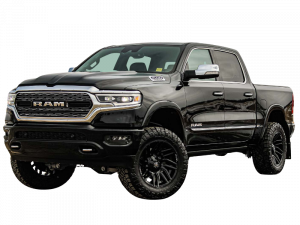
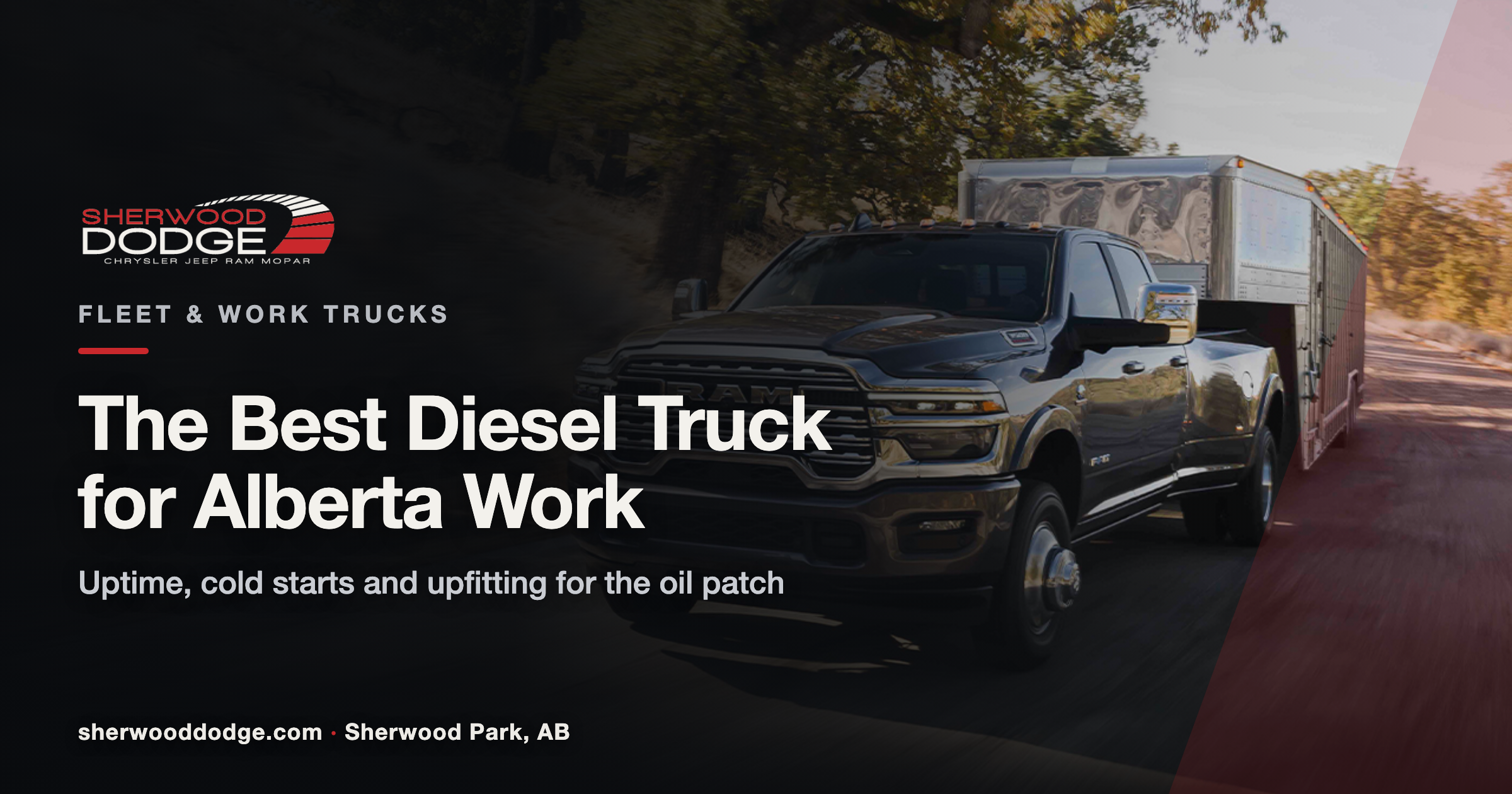
For most Alberta work fleets the answer is a RAM 3500 with the High-Output 6.7L Cummins turbo-diesel, which leads the pickup line-up at up to 36,610 lb (16,606 kg) of towing and up to 7,590 lb (3,443 kg) of payload with the 6.4L HEMI gas V8 (RAM Canada, 2026). If your trucks carry a service body or deck rather than tow, the answer shifts to a RAM Chassis Cab, built from the frame back to accept an upfit.
Capability is only half the decision. A truck running lease roads out of Fort Saskatchewan and the Industrial Heartland is judged on uptime, cold starts at minus 35, gravel durability, and what the warranty covers on a fleet account. That last one catches more commercial buyers than any spec sheet.
Key Takeaways
- The RAM 3500 leads the pickup line-up at up to 36,610 lb (16,606 kg) towing with the High-Output 6.7L Cummins (430 hp / 1,075 lb-ft) and 7,590 lb (3,443 kg) payload with the 6.4L HEMI.
- For decks, tanks, cranes and service bodies, a RAM Chassis Cab 3500/4500/5500 fits: over 70 vehicle inputs and outputs, dual alternator output up to 480 amps, and Power Take Off.
- Fleet buyers, note: RAM Canada’s 10-year/160,000 km powertrain warranty covers retail purchases and leases, including to businesses, but excludes fleet purchases (RAM Canada, 2026).
- Snow Plow Prep Package standard on RAM 3500, plus a 189 L (50 U.S. gallon) available fuel tank.
What Does a Work Truck Actually Need in Alberta?
A work truck here is judged on uptime first and capability second, because a truck rated to pull 36,000 lb is worth nothing if it is sitting in a bay during turnaround season. Three conditions shape the spec around Edmonton and Strathcona County.
Temperature swing puts the focus on block heater use, fuel treatment, and battery health rather than horsepower. Road surface matters next, because lease roads and washboard work suspension, bushings, and everything bolted to the frame far harder than pavement, so mounting quality on a service body counts as much as the body. Distance is third, and it is where diesel fuel economy and tank capacity show up on the operating cost line. The rule that follows: buy for the duty cycle, not the spec sheet.
RAM 1500 vs 2500 vs 3500: Matching the Truck to the Job
Match the truck to the load and the body, not to the biggest number on the page: the RAM 1500 covers light service and supervisor duty, the RAM 2500 most trailer and moderate service-body work, the RAM 3500 heavy payload and gooseneck hauling, and the RAM Chassis Cab anything needing a purpose-built deck or body (RAM Canada, 2026).
Figures below are maximums for a properly equipped truck; ratings move with cab, bed, axle ratio, and engine.
| Job type | Recommended RAM configuration | Why it fits |
|---|---|---|
| Supervisor, sales and light service trucks | RAM 1500 | Up to 11,220 lb (5,089 kg) towing, 3.0L Standard-Output Hurricane (420 hp / 469 lb-ft) |
| Trailer towing, moderate service bodies, trades | RAM 2500 | Up to 20,000 lb (9,071 kg) towing (Cummins); 4,580 lb (2,077 kg) payload (6.4L HEMI) |
| Heavy payload, loaded decks, gooseneck hauling | RAM 3500 | Up to 36,610 lb (16,606 kg) towing (Cummins); 7,590 lb (3,443 kg) payload (6.4L HEMI) |
| Purpose-built decks, tanks, cranes, dump bodies | RAM Chassis Cab 3500/4500/5500 | Over 70 inputs and outputs, dual alternator to 480 amps with the Cummins, PTO available |
| Winter plow and yard duty | RAM 3500 | Snow Plow Prep Package standard |
Most fleets land on a mixed order: light trucks for people who drive all day and carry little, heavy trucks for crews who load to the limit, and chassis cabs for units that will wear a body for a decade. Our RAM 2500 versus RAM 3500 breakdown goes deeper, and you can browse our RAM 2500, RAM 3500, and RAM 1500 inventory.
Why the Cummins Suits High-Kilometre Service Work
The 6.7L Cummins earns its place on high-kilometre work because it makes torque low in the rev range, where a loaded truck operates. The High-Output version produces 430 hp and 1,075 lb-ft, and RAM Canada cites Best-In-Class Base Diesel Torque when properly equipped (2026). Pulling a loaded trailer up a grade all day, that matters more than peak horsepower.
Distance is the second argument. Diesels generally return better fuel economy towing heavy over long runs, and the RAM 3500 offers an available 189 L (50 U.S. gallon) fuel tank, the largest in its class (RAM Canada, 2026). On the 3500 the Cummins pairs with the TorqueFlite HD 8-speed automatic.
The gas 6.4L HEMI still suits trucks that spend more days empty than loaded, and the payload picture is not the obvious one: on the RAM 2500, maximum payload is 4,580 lb (2,077 kg) with the HEMI versus 3,590 lb (1,627 kg) with the Cummins, because the diesel engine weighs more (RAM Canada, 2026). If your trucks carry heavy and tow light, gas can be the better answer. Our comparison of the Cummins and the HEMI for Alberta duty covers that trade-off.
Upfitting: Service Bodies, Decks and What to Plan For
If the truck needs a deck, crane, tank, or purpose-built service body, plan on a RAM Chassis Cab rather than a pickup, because it is engineered from the factory to be finished by a body builder. The platform provides a Vehicle System Interface Module with over 70 vehicle inputs and outputs, dual alternator output up to 480 amps with the available 6.7L Cummins, and Power Take Off configurations (RAM Canada, 2026).
Plan for three things before the order goes in. Sequence: the body build happens after the chassis arrives, so upfit time stacks on top of vehicle time. Electrical load: total everything the finished truck will run, because that drives the alternator and battery decision. Weight: the body, its contents, tools, fuel, and crew all count against payload, and the truck has to be legal fully loaded, not empty on the lot.
The expensive mistake is ordering the chassis first and thinking about the body second.
Cold-Weather Readiness for a Fleet
Cold-weather reliability comes from process, not from one option box: block heaters plugged in overnight, winter-treated diesel to prevent fuel gelling, batteries tested before the season rather than after a failure, and a warm-up before the truck is loaded hard.
For a fleet, the leverage is in standardising that routine. When every truck gets the same pre-winter battery and block heater check on the same schedule, cold-start failures stop being random events and become a line item you can plan around.
The Snow Plow Prep Package is standard on the RAM 3500, which also offers a Class-Exclusive Auto-Level Rear Air Suspension for keeping a loaded truck level (RAM Canada, 2026). If your trucks plow yards or lease approaches, spec that from the start.
Warranty and Fleet Purchases: The Detail Most Buyers Miss
This is the one that catches commercial buyers off guard, so it is worth stating plainly: RAM Canada’s 10-year or 160,000 km limited powertrain warranty on new, previously unregistered 2026 and 2027 models covers the engine, transmission, transfer case, driveshafts, differentials and axles, and it applies to retail purchases and leases, including to businesses, but it excludes fleet purchases (RAM Canada, 2026). Full battery electric vehicles are also excluded, and the coverage is non-transferable, applying to the original retail purchaser or lessee.
The consequence is that how you buy changes what you are covered for. A business buying a truck or two at retail is treated differently from a purchase made through a fleet account, and that difference is not visible on the window sticker. Before you finalise a multi-unit order, ask which terms attach to your purchase structure and get the answer in writing.
We will not guess at your coverage here, because it depends on how the deal is written. Bring us the structure you are planning and we will confirm which warranty applies before anything is signed.
Buying and Servicing Multiple Units
Two things decide whether a multi-unit purchase goes well: configuration consistency and service planning. Ordering one configuration across a group simplifies parts, tires, upfit templates, driver familiarity, and resale. On service, ask how quickly a truck gets into a bay when it is down, whether work can be scheduled around your shutdown and turnaround windows, and what is stocked locally. Turnaround time is a real cost and belongs in the decision alongside price.
Frequently Asked Questions
What is the best diesel truck for oil-patch work in Alberta?
A RAM 3500 with the High-Output 6.7L Cummins suits most oil-and-gas service and trades fleets, at up to 36,610 lb (16,606 kg) of towing and the line-up’s highest pickup payload of 7,590 lb (3,443 kg) with the 6.4L HEMI. If the truck will carry a deck or service body rather than tow, choose a RAM Chassis Cab.
Does RAM Canada’s 10-year powertrain warranty apply to fleet purchases?
No. The 10-year or 160,000 km limited powertrain warranty on new, previously unregistered 2026 and 2027 models applies to retail purchases and leases, including to businesses, but excludes fleet purchases. It is also non-transferable and excludes full battery electric vehicles. Confirm the terms that apply to your deal before signing.
Should I buy a pickup or a chassis cab for a service body?
Choose a RAM Chassis Cab when the truck needs a purpose-built deck, tank, crane, or dump body. It is engineered to be finished by a body builder, with over 70 vehicle inputs and outputs, dual alternator output up to 480 amps with the available Cummins, and Power Take Off configurations. A pickup is the better answer when a bed-mounted body or trailer towing covers the work.
Is the Cummins diesel or the HEMI gas engine better for a work fleet?
It depends on whether your trucks tow or carry. The High-Output 6.7L Cummins produces 430 hp and 1,075 lb-ft and suits heavy, frequent towing over distance. The 6.4L HEMI costs less up front and allows more payload on the RAM 2500, at 4,580 lb (2,077 kg) versus 3,590 lb (1,627 kg), because the diesel engine weighs more.
How do RAM diesels handle Alberta cold starts?
Reliably, when the fleet routine supports them. Plug in block heaters overnight, run winter-treated diesel to prevent fuel gelling, test batteries before winter rather than after a failure, and allow a brief warm-up before loading hard. Standardising that check turns cold-start failures into a planned maintenance item.
Talk to Us About Your Next Units
If you are speccing trucks for a crew, replacing units, or planning an order with an upfit attached, the fastest path is a conversation about the actual duty cycle. Bring us your loaded weights, body requirements, and timing, and our team can help spec and source multiple units.
Visit Sherwood Dodge at 230 Provincial Ave, Sherwood Park, AB T8H 0E1, or call (780) 410-4100. We serve Sherwood Park, Edmonton, Strathcona County, Fort Saskatchewan, and northern Alberta. You can also browse our current RAM 3500 inventory.